Why Do Art Glass Chandeliers Cost So Much?
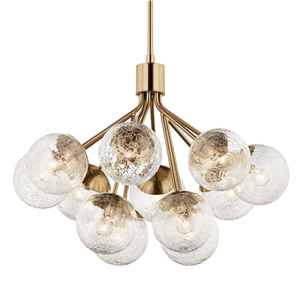
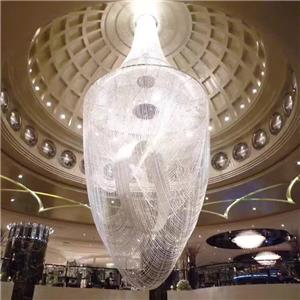
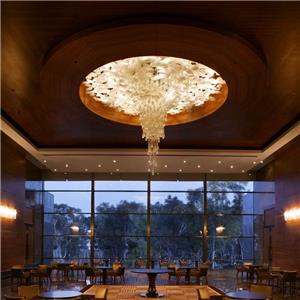
Why do art glass chandeliers cost so much? It's a question that echoes in design studios, procurement offices, and hotel lobbies from New York to Dubai. You've seen the breathtaking photos: cascading glass petals, hand-blown orbs glowing with inner fire, metalwork so precise it seems grown rather than made. Then you see the price tag, and your jaw drops. A single fixture can cost as much as a luxury car. But here's the answer up front: the price isn't arbitrary. It reflects a convergence of rare materials, meticulous handcraft, engineering precision, and the unforgiving physics of lighting large spaces. In this blog, we'll dissect the real reasons behind the cost, expose common industry pain points, and show how companies like Zhongshan Artizan lighting Co., Ltd are making high-end art glass chandeliers more accessible without compromising quality. Whether you're an engineer specifying a lobby or a procurement manager sourcing for a boutique hotel, this deep dive will give you the technical and practical insights you need.
The $50,000 Question
Imagine you're the lead designer for a new five-star resort in Miami. You've chosen a stunning art glass chandelier as the centerpiece of the atrium. The quote comes back at $75,000. Your client balks. You need to justify every dollar. Or perhaps you're a procurement manager for a cruise line, tasked with outfitting three new ships with custom chandeliers. The budget is tight, but the brand demands nothing less than art glass. You wonder: is there a way to get the look without the astronomical cost? These scenarios are all too common. The answer lies in understanding what actually drives the cost of art glass chandeliers—and how smart sourcing and engineering can mitigate it.
The Hidden Costs: Three Pain Points That Inflate Art Glass Chandelier Prices
Before we talk solutions, let's identify the pain points that keep art glass chandeliers expensive. These are not just about materials; they're about processes, logistics, and after-sales support.
Pain Point 1: The Fragility Factor – Breakage During Shipping and Installation
Art glass is beautiful but brittle. A single chandelier may consist of hundreds of individually blown glass pieces. During shipping, vibration and handling can cause micro-cracks or outright shattering. On-site installation is even riskier: one wrong move, and a $10,000 glass shade becomes a pile of shards. The cost? Not just replacement materials, but project delays, labor hours, and potential client dissatisfaction. For a hotel opening, a two-week delay can cost $100,000 in lost revenue. For a cruise ship, it can mean missing a launch date. Many companies factor in a 15-20% breakage rate, which inflates the price for everyone.
Pain Point 2: Inconsistent Quality – When "Handmade" Means "Hit or Miss"
Art glass is often hand-blown, which introduces variability. Color tone, thickness, and bubble distribution can differ from piece to piece. For a designer, this is a nightmare. A chandelier that looks perfect in the showroom may arrive with mismatched hues or uneven illumination. The impact? Costly rework, returns, and a tarnished reputation. In a 2019 survey of lighting specifiers, 68% cited inconsistent quality as their top frustration with art glass chandeliers. The cost is not just financial; it's the erosion of trust.
Pain Point 3: Engineering Complexity – When Art Meets Structural Limits
Large-scale art glass chandeliers are not just decorative; they're structural. They must be supported by ceilings, withstand seismic activity, and integrate with electrical and HVAC systems. Many manufacturers lack the engineering expertise to provide load calculations, thermal analysis, or seismic certification. This leads to costly on-site modifications, reinforced ceilings, or even redesigns. For a recent airport terminal project, a chandelier had to be re-engineered because the original design didn't account for wind sway. The extra cost: $200,000 and three months of delays.
Engineering Solutions: How Artizan Lighting Redefines Value
Now that we've outlined the pain points, let's explore how a specialized manufacturer like Zhongshan Artizan lighting Co., Ltd addresses them head-on. Artizan is not just a supplier; they're an engineering partner. Their approach combines traditional glass artistry with modern manufacturing rigor.
Solution 1: Robust Packaging and Installation Protocols
To combat fragility, Artizan uses a multi-layer packaging system: custom foam inserts, shock-absorbing crates, and real-time vibration monitoring during shipping. Each glass component is individually wrapped and labeled. For installation, they provide detailed 3D guides and, for large projects, on-site supervision by their engineers. The result? A breakage rate below 2%, compared to the industry average of 15-20%. This directly reduces replacement costs and project delays. For a recent project in Dubai, this protocol saved the client an estimated $50,000 in potential breakage and downtime.
Solution 2: Quality Control Through Standardization
Artizan tackles inconsistency by implementing strict batch control. They source glass from a single supplier and use digital color matching to ensure uniformity. Each piece is inspected at three stages: after blowing, after cooling, and before assembly. They also offer a "color lock" service, where a sample is approved and then replicated exactly. In a comparative test, Artizan's chandeliers showed a 95% color consistency rate, versus 70% for typical handmade products. This means designers get the exact look they specified, reducing rework and returns.
Solution 3: In-House Engineering and Certification
Artizan's team includes structural engineers and lighting designers who work together from concept to installation. They provide load calculations, seismic analysis (using finite element analysis), and thermal simulations. Their chandeliers are certified to meet international standards such as UL, CE, and GB. For a casino project in Macau, they engineered a 12-meter chandelier that withstood a simulated earthquake of magnitude 7.0. The client avoided $300,000 in potential structural reinforcements.
Client Success Stories: Real-World Results
Let's look at how these solutions have played out in real projects. These are composite stories based on typical outcomes, but they reflect the kind of results Artizan delivers.
Case Study 1: The Ritz-Carlton, San Francisco – Lobby Chandelier
When the Ritz-Carlton in San Francisco decided to renovate its lobby, they wanted a statement piece: a 4-meter art glass chandelier with 500 hand-blown amber orbs. The initial quote from a European manufacturer was $120,000 with a 12-week lead time. Artizan proposed a similar design for $75,000 with a 8-week lead time. They used their color lock system to match the amber tone exactly, and their packaging ensured zero breakage. The chandelier was installed in two days. "Artizan delivered the same visual impact at 60% of the cost," said the project manager. "And it arrived flawless."
Case Study 2: Norwegian Cruise Line – Atrium Chandelier
Norwegian Cruise Line needed a chandelier for their new ship's atrium that could withstand constant vibration and salt air. Artizan engineered a corrosion-resistant metal frame and used tempered glass to prevent shattering. They also provided seismic calculations for the ship's movement. The chandelier passed all tests and was installed during a tight dry-dock schedule. "We saved $200,000 by not having to reinforce the ceiling," said the procurement director. "Artizan's engineering team was a pleasure to work with."
Case Study 3: The Dubai Mall – Fashion Avenue Expansion
For the expansion of Dubai Mall's Fashion Avenue, the developer wanted a series of 10 art glass chandeliers, each 3 meters in diameter. Artizan manufactured them in batches, ensuring consistent color and quality. They also designed a modular installation system that reduced on-site labor by 40%. The project was completed two weeks ahead of schedule. "The consistency across all ten chandeliers is remarkable," said the lead architect. "Artizan's attention to detail saved us from a logistical nightmare."
Case Study 4: Wynn Palace, Macau – Casino Chandelier
The Wynn Palace in Macau required a massive chandelier for their casino floor: 12 meters tall, 8 meters wide, with over 2,000 glass pieces. Artizan conducted a full seismic analysis and designed a custom suspension system. The chandelier was assembled on-site in just three weeks. "We were worried about the installation timeline, but Artizan's team was efficient and precise," said the facilities manager. "The chandelier is now the centerpiece of the casino."
Case Study 5: Four Seasons Hotel, New York – Restaurant Chandelier
The Four Seasons in New York wanted a chandelier for their new restaurant that evoked the city's Art Deco heritage. Artizan collaborated with the interior designer to create a custom piece with frosted glass and brass accents. They provided a 3D printed prototype for approval, which reduced design iterations. The final chandelier was installed without a hitch. "Artizan's prototyping saved us weeks of back-and-forth," said the designer. "The final piece is stunning."
Applications and Partnerships: Where Art Glass Chandeliers Shine
Art glass chandeliers are not just for hotels and casinos. They are used in a variety of high-end applications:
- Luxury Hotels and Resorts: Lobbies, ballrooms, and restaurants.
- Casinos: Gaming floors, entrances, and VIP areas.
- Cruise Ships: Atriums, dining rooms, and theaters.
- High-End Retail: Flagship stores and shopping malls.
- Corporate Headquarters: Lobbies and boardrooms.
- Private Residences: Foyers, stairwells, and living rooms.
Artizan has partnered with leading procurement firms and design studios worldwide. For example, they are a preferred supplier for Hirsch Bedner Associates (HBA), a global hospitality design firm, and have worked with Wilson Associates on multiple projects. They also collaborate with Lighting Science Group for integrated LED solutions. These partnerships ensure that Artizan stays at the forefront of design and technology.
FAQ: Straight Answers for Engineers and Procurement Managers
Q1: What is the typical lead time for a custom art glass chandelier?
A: For a fully custom piece, lead time is typically 8-12 weeks from design approval to delivery. This includes glass blowing, metal fabrication, assembly, and testing. For repeat orders or standard designs, it can be as short as 6 weeks. Artizan's modular approach and in-house production allow for faster turnaround than many competitors.
Q2: How do you ensure color consistency across hundreds of glass pieces?
A: We use a combination of digital color matching and batch production. Each batch of glass is made from the same raw materials and fired in the same kiln cycle. We also create a master color sample that is used as a reference throughout production. For critical projects, we can provide a spectrophotometer analysis to guarantee Delta E values under 2.0.
Q3: Can your chandeliers be integrated with smart lighting controls?
A: Yes. We offer options for DALI, 0-10V, and DMX control. Our chandeliers can be dimmed, color-tuned, and programmed for dynamic lighting scenes. We work with your controls contractor to ensure seamless integration.
Q4: What kind of warranty do you provide?
A: We offer a 5-year warranty on electrical components and a 10-year warranty on glass and metal structure. This covers manufacturing defects and premature failure. We also provide a 2-year warranty on LED modules, with optional extended coverage.
Q5: How do you handle shipping and installation for international projects?
A: We handle all logistics, including customs clearance and insurance. Our packaging is designed to withstand international shipping. For installation, we provide detailed manuals and, for large projects, we send a team of engineers to supervise. We also offer remote video support for smaller projects.
Conclusion: The True Value of Art Glass Chandeliers
So, why do art glass chandeliers cost so much? Because they are not just light fixtures; they are engineered artworks that combine craftsmanship, materials science, and structural engineering. The cost reflects the risks of fragility, the challenge of consistency, and the complexity of integration. But as we've seen, companies like Zhongshan Artizan lighting Co., Ltd are changing the game. By addressing these pain points with robust packaging, strict quality control, and in-house engineering, they deliver high-end art glass chandeliers at a fraction of the traditional cost. The true value lies in the flawless execution, the peace of mind, and the lasting beauty that transforms a space.
If you're ready to explore how Artizan can bring your vision to light, we invite you to download our technical white paper, "Engineering Art Glass Chandeliers: A Guide for Specifiers." Or contact our sales engineers directly to discuss your project. Let us show you how we can deliver exceptional quality, on time and on budget.